



How Honda is Helping Ohio Drivers Avoid Potholes
Big news for Ohio drivers! Honda and DriveOhio have been working on a first-of-its-kind project that would help fight Ohio drivers’ biggest enemy—potholes. They recently completed a project aimed at determining how well real-time vehicle-generated data can detect road damage. Honda is committed to advancing safety technologies through their “Safety for Everyone” mission, aiming to achieve zero traffic collision fatalities involving Honda vehicles by 2050. That’s led them to this project, which focuses on the safety of the roads themselves.
…
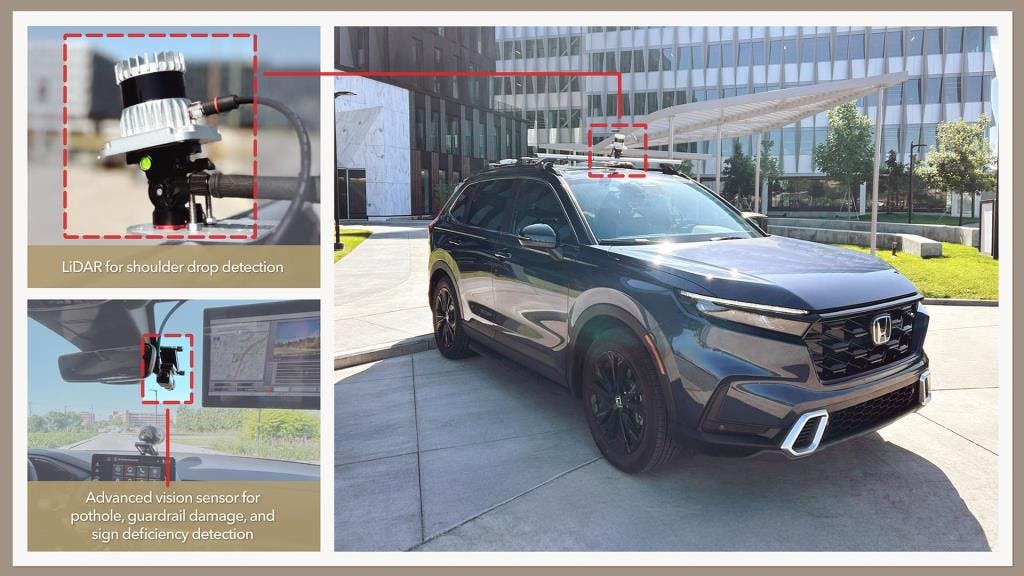
Honda’s Proactive Roadway Maintenance System equips cars with advanced vision and LiDAR sensors. As the car drives down the street, this technology detects defects in the roads and provides that data to the Ohio Department of Transportation (ODOT). It looks for:
- Worn or obstructed road signs
- Damage to guardrails and cable road barriers
- Pothole size, location, and development
- Condition, percentage, and depth of shoulder drops
- Insufficient or worn roadway striping that affects driver-assistance features
- Rough road quality
…
In the pilot test for this system, ODOT team members drove about 3,000 miles across Ohio in Honda vehicles outfitted with this technology. As they were driving, ODOT operators were able to review reported damages in real time through web dashboards. The data collected by the vehicles gets processed with AI, sent to a Honda cloud platform for analysis, then is integrated into Parsons iNET Assist Guardian system. This creates a straightforward pipeline that helps prioritize and group work orders for ODOT maintenance teams. Work orders are grouped by severity and proximity, increasing efficiency and allowing maintenance teams to repair several issues in one trip.
…
From the data they collected across 3,000 miles, the results showed that the Proactive Roadway Maintenance System is highly accurate. It was shown to be:
- 99% accuracy for damaged or obstructed signs
- 93% accuracy for damages guardrails
- 89% accuracy for potholes
…
As ODOT team members review and flag misdetections, the AI system grows more accurate. Additional insights suggest only a small percentage of roads had insufficient lane markings, suggesting these jobs can be scheduled more efficiently. Sensors reliably measured road roughness levels and detected several high-shoulder drop-offs that were difficult to find during visual inspections.
…
By reducing the need for manual inspections, the system improves safety of road crews and keeps them out of traffic. It can detect some hazards more effectively than a visual search as well, catching issues before they grow to be more costly and time-consuming to fix. It’s estimated that switching to this system could save ODOT over $4.5 million annually by reducing manual inspection time, optimizing maintenance schedules, and preventing costly deferred repairs through proactive inspection. Honda is now focusing their efforts on scaling the prototype for real-world operations and hopes to get their customers to participate in road hazard data sharing in the future.